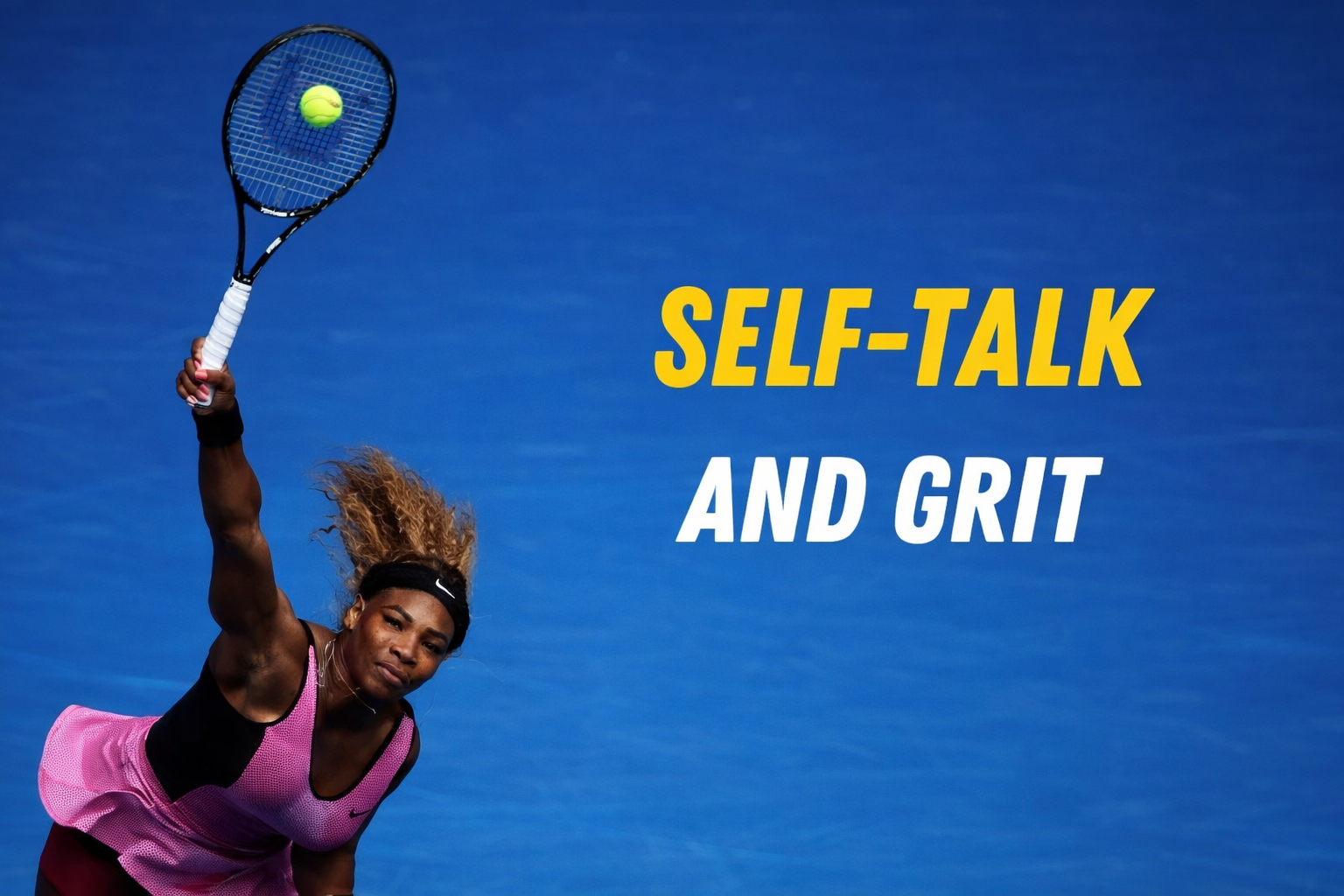
Tennis is one of the most mentally demanding sports in the world. Long matches, momentum swings, and constant self-evaluation mean players are almost never silent in their own heads. What we say to ourselves on court can shape how we respond to pressure, setbacks, and long-term challenges.
In my MSc research, I explored the relationship between self-talk and grit in elite tennis players aged 10 to 30. Grit, defined as passion and perseverance for long-term goals, has been linked to sustained success across sport and performance domains. But how it connects to what athletes say to themselves during competition has received far less attention.
Data from 88 elite tennis players across 16 countries revealed several important insights.
First, positive and motivational self-talk (e.g., “I can do this,” “Stay strong”) was strongly associated with higher grit levels. Players who consistently encouraged themselves were more likely to persist through setbacks and remain committed to long-term development. This supports existing sport psychology research showing that motivational self-talk enhances confidence, emotional control, and resilience.
However, one finding challenged a common assumption.
Negative self-talk (e.g., “I’m struggling,” “That wasn’t good enough”) was also positively related to grit. Rather than undermining perseverance, certain forms of negative self-talk appeared to coexist with, and possibly even support persistence in elite players. For some athletes, acknowledging frustration or dissatisfaction may act as a signal to re-engage, refocus, or work harder.
Interestingly, instructional self-talk (e.g., “Focus on your technique”) did not predict grit. This may be because experienced players rely more on automatic skills and emotional regulation than conscious technical reminders during competition.
These findings suggest that self-talk is not simply “good” or “bad.” What matters is how athletes use it.
Trying to eliminate all negative thoughts may be unrealistic and unnecessary. Instead, resilient athletes learn to respond to their inner dialogue effectively. In practice, this means:
Mental training should reflect this complexity. Rather than forcing positivity, athletes benefit more from flexible, individualised self-talk strategies that support persistence over time.
Grit is not just about toughness, it’s about staying engaged when things are hard. And self-talk plays a central role in that process. By understanding and training the way athletes speak to themselves, we can help them build the psychological foundations needed for long-term performance and growth.